
Romance Tropes Explained: What They Are, Why They Work, and How to Write Them Fresh
A romance trope is a familiar storytelling pattern — a setup, relationship dynamic, or character role that recurs across love stories and instantly signals to a reader what kind of emotional journey they’re about to take. Enemies to lovers, fake dating, second chance, only one bed: these aren’t lazy shortcuts, they’re the shared vocabulary of the genre. Whether you outline by hand or draft alongside an ai romance writing assistant, understanding tropes is what lets you meet reader expectations on purpose instead of by accident.
This guide explains what tropes actually are, why readers seek them out, how a trope differs from a cliché, the most popular tropes with examples, and — the part most lists skip — how to pick and execute a trope so it feels fresh rather than recycled. Everything here is about craft: tension, structure, and emotional payoff, kept tasteful and reader-appropriate.
What Is a Romance Trope?
A trope is a plot device, theme, or motif that commonly appears in a genre — in romance, it’s a recognizable relationship setup or dynamic. The word predates fiction blogs: Merriam-Webster defines a trope broadly as a common or overused theme or device, a meaning that has simply migrated from rhetoric into storytelling. In romance, tropes range from a single scene beat (the meet-cute) to a whole relationship arc (enemies to lovers). Estimates from craft writers run into the hundreds, if not thousands, of named tropes, and the list keeps growing as readers and writers coin new shorthand for familiar dynamics.
A trope is a shared narrative convention — it creates recognition and expectation before a single scene of your book is written. That’s the whole function: it lets a reader pick a book off a shelf (or a search result) already knowing roughly what emotional ride they’re signing up for.
Trope vs. genre vs. subgenre
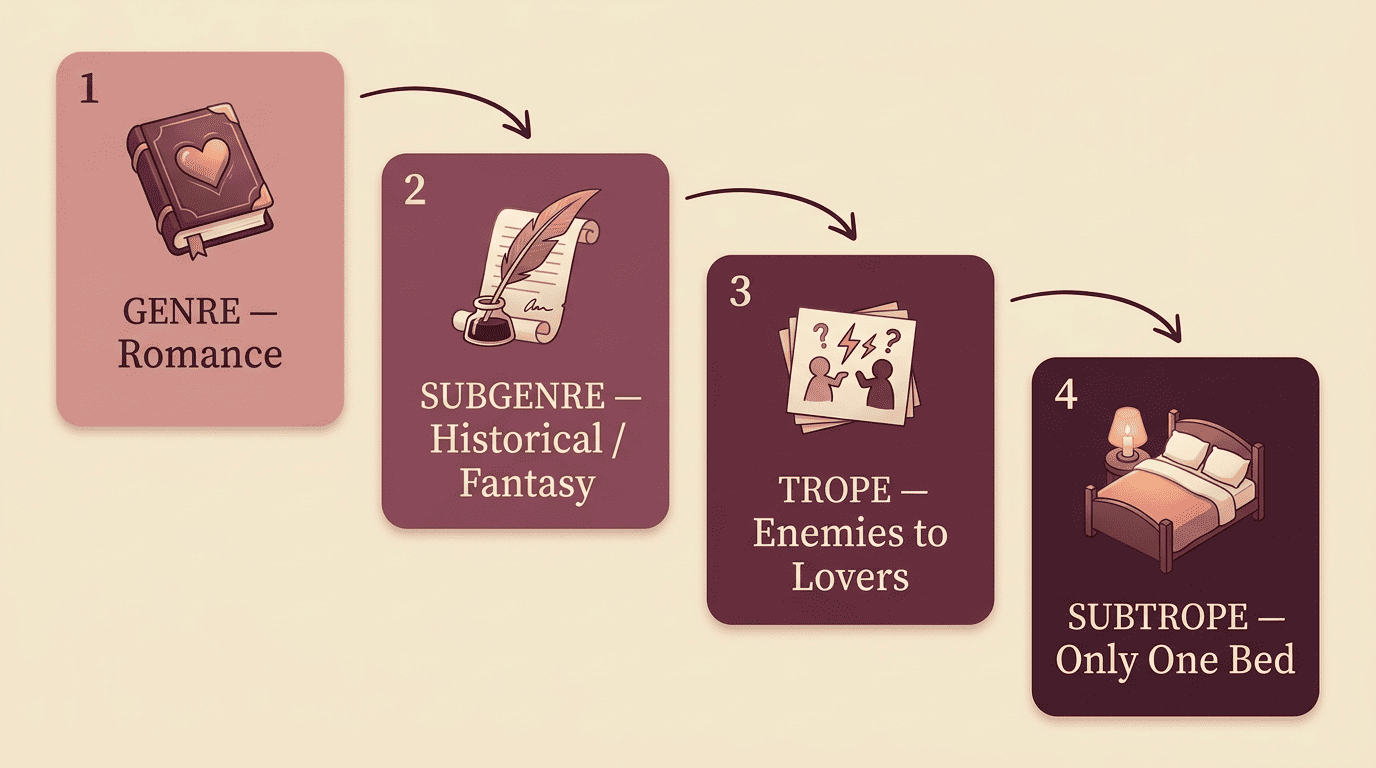
It helps to see the ladder writers actually climb when they plan a book:
| Level | Example | What it defines |
|---|---|---|
| Genre | Romance | Central love story + mandatory happy ending |
| Subgenre | Contemporary, historical, fantasy/paranormal, romantic suspense | Setting, tone, world rules |
| Trope | Enemies to lovers | The core relationship dynamic |
| Subtrope | Only one bed, who-hurt-you, wound-tending | A specific beat inside the trope |
A single book stacks several of these at once — a historical romantic suspense novel that runs on enemies to lovers with an only-one-bed beat in act two is entirely normal. Readers increasingly «shop by trope,» searching #enemiestolovers or #onlyonebed the way they once browsed by author, so knowing where your book sits on this ladder is also a discoverability decision.
Why Romance Tropes Work: The Psychology of Expectation
Readers come to romance for a guaranteed emotional payoff. As both the Romance Writers of America’s definition of the genre and general genre convention hold, a central love story paired with an emotionally satisfying, optimistic ending is what makes a book «a romance» rather than a story that merely contains romance. That ending takes one of two forms: an HEA (Happily Ever After) or an HFN (Happy For Now). A trope tells the reader which flavor of that journey they’re getting. Far from ruining suspense, it reframes it — the question isn’t if the couple will get together, but how, and at what cost.
Familiarity plus variation
Craft writers often describe a well-executed trope as a «warm familiar hug»: comfort comes from the pattern, delight comes from the fresh execution.
A romance or romantic novel is a genre fiction work focused on the relationship and romantic love between two people, often concluding with an emotionally satisfying or optimistic ending.
Romance novel — genre definition, Wikipedia
The tension a writer manages is between the expected shape and the surprising specifics — same skeleton, new heart. A reader who picks up a grumpy-sunshine book already trusts the arc will end in warmth; your job is making the road there feel like it belongs to no other couple but these two.
Trope vs. Cliché: The Difference Is Execution
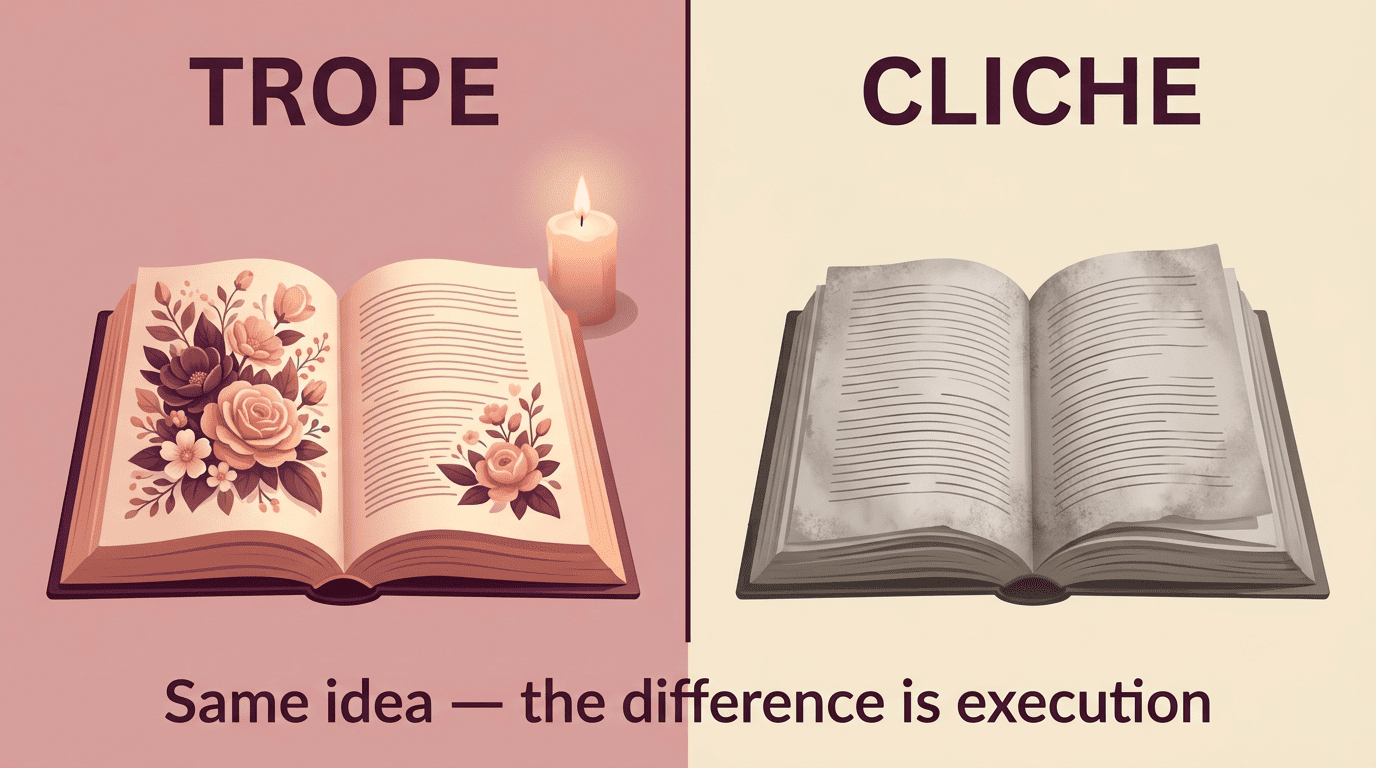
A trope is neutral raw material; a cliché is that same trope executed exactly the way readers have seen a hundred times, with no specificity attached to it. «Enemies to lovers» is a trope. «Cold billionaire and feisty assistant trade one witty barb, then fall into bed with zero emotional groundwork» is a cliché. The idea hasn’t changed — what collapsed is the execution. The fix is never abandoning the trope; it’s grounding it in specific characters, motivation, and consequence.
The cliché test
Run any beat through this quick gut check before you commit it to the page:
- Could I swap in any two other characters and nothing about the scene would change?
- Does this beat happen because of who these two people specifically are, or only because the trope requires it?
- Is there a real emotional cost or wound underneath the moment, not just a plot mechanism?
- Would a reader who’s seen this trope fifty times still feel something new here?
- If I cut this scene, does the relationship lose information, or just word count?
Passing this test is how a familiar setup reads as fresh instead of recycled. It’s a five-minute check, but it’s usually the difference between a beat readers skim and one they highlight.
The Most Popular Romance Tropes (With Examples)
Genre conventions in romance have accumulated a recognizable cast of recurring setups, and most working writers know these by name before they ever open an outline.
Enemies to lovers. Two characters start in genuine conflict — rivalry, opposing goals, wounded pride — and the friction gradually converts into attraction. It’s worth separating this from rivals to lovers, which is competitive rather than hostile. The classic touchstone is Elizabeth and Darcy in Jane Austen’s Pride and Prejudice; a modern, office-set version is Sally Thorne’s The Hating Game.
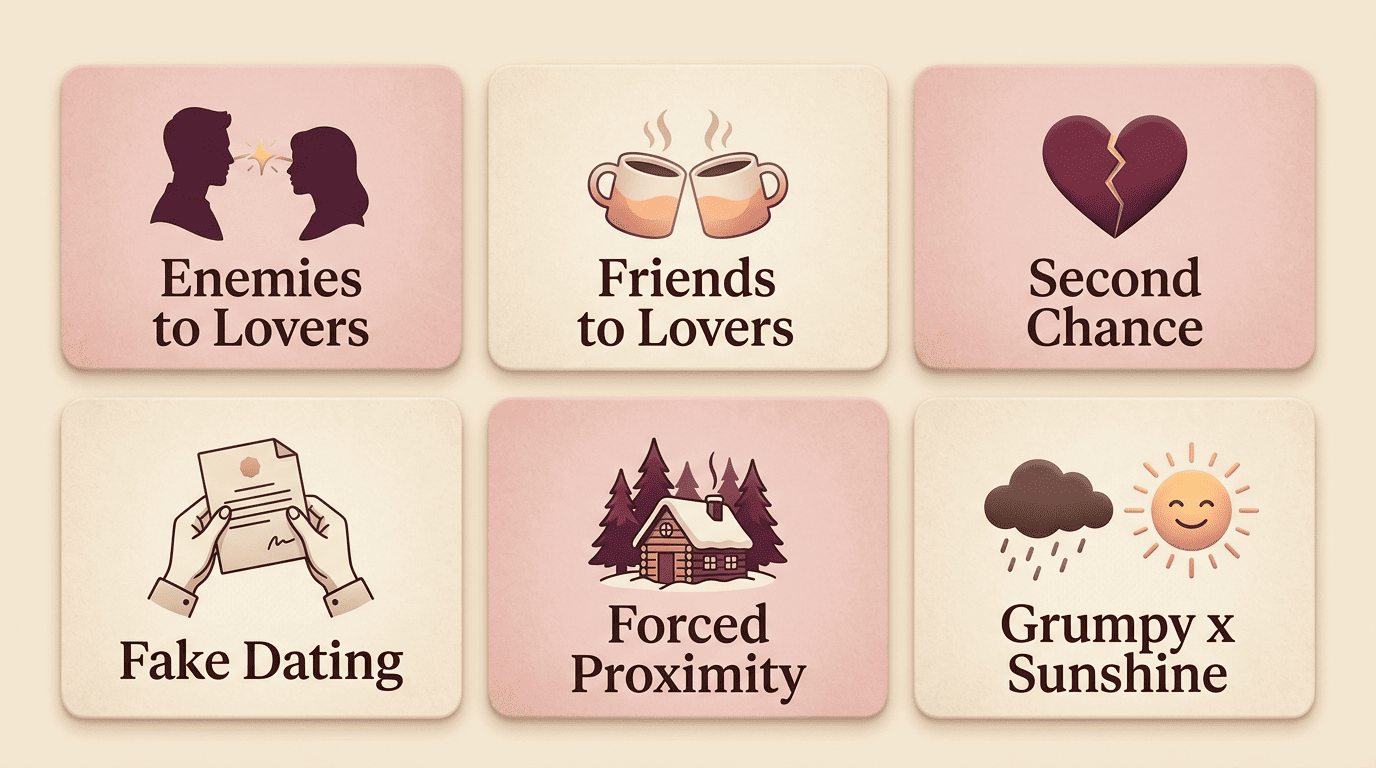
Friends to lovers. A long-standing friendship tips into romance, and the stakes become the friendship itself — what’s risked if the confession goes wrong. It’s powered by history, trust, and the fear of losing what they already have.
Second chance romance. Former partners get another shot at each other, rekindling an old flame or finally resolving a past misunderstanding. The Notebook is the genre’s archetype. The emotional engine here is regret paired with visible growth — the reader needs proof both people have changed.
Fake dating / fake relationship. Two people pretend to be together — for a wedding, a visa, publicity — until the pretense outpaces the plan. It comes with built-in dramatic irony, since the reader is usually in on the ruse before the characters admit their real feelings to themselves.
Forced proximity (including «only one bed»). Circumstance traps the pair together — a road trip, a snowstorm, a shared assignment, or the infamous single hotel bed. Office romance is really a slow-drip version of the same mechanism. Proximity manufactures the intimacy and tension the plot needs without forcing either character to make the first move too soon.
Grumpy / sunshine and opposites attract. A guarded, gruff character is softened by a warm, optimistic one — a beloved subtype of opposites attract and a favorite of the current market. It works because each character supplies exactly what the other one lacks.
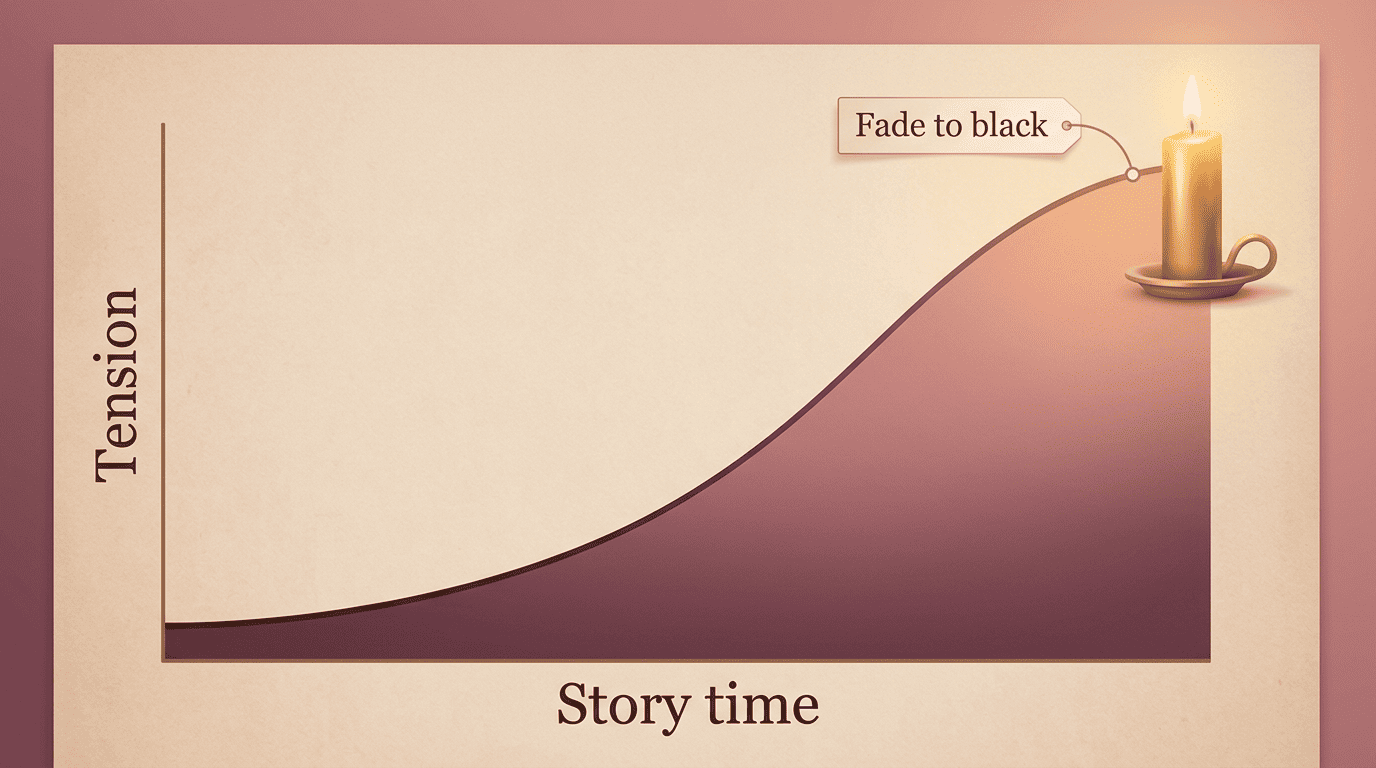
Rounding out the roster: the slow burn builds tension patiently across the whole book, resolving at the emotional peak — the natural home of a tasteful fade-to-black rather than an explicit scene. The meet-cute is a charming, often comedic first encounter that plants the seed of the whole relationship. Forbidden love raises the stakes through external barriers — family, class, circumstance. And soulmates / fated mates lets destiny bind the pair together, a convention especially common in paranormal romance.
Beyond the core list, several other tropes widen the field regularly enough to earn their own dedicated shelves:
- Marriage of convenience — a contract or arrangement forces a wedding before feelings enter the picture.
- Instalove — attraction hits immediately, and the story leans on chemistry rather than a slow build.
- Amnesia — one partner loses the memory of the relationship and has to fall for the other person again.
- Secret identity — a hidden royal, heir, or billionaire conceals who they really are until the reveal forces a reckoning.
All four can pair with the softer Happy For Now ending some subgenres favor over a full HEA.
How to Use Tropes in Your Own Writing
Choosing a trope is a craft decision, not just a marketing one — though it’s frequently both at once.
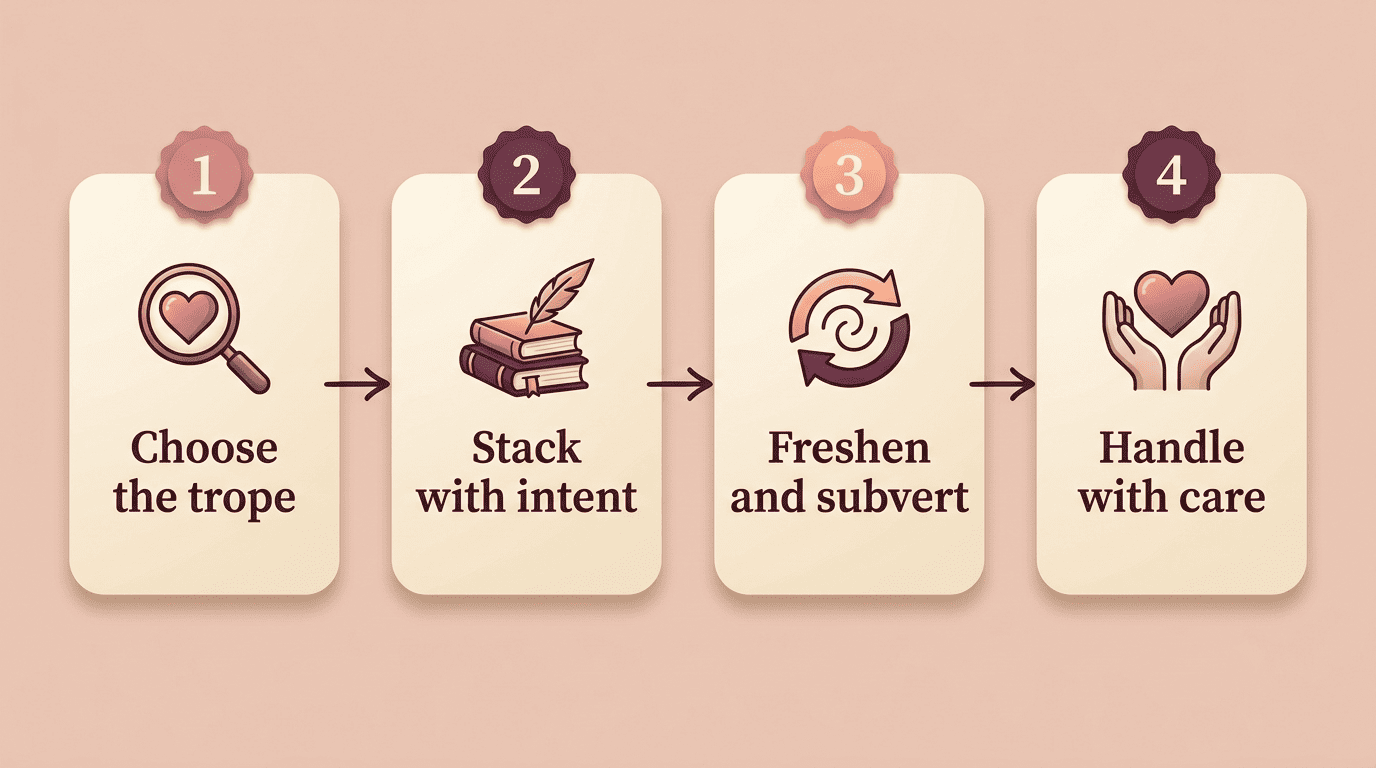
Choose the trope that fits your characters, not the trend
Start from the wound and the arc: which trope forces these two people to change? Pick the setup that maximizes internal conflict for your specific characters, not just the hashtag that happens to be trending this month. A trope chosen for the algorithm and not the characters is usually the first thing that reads as hollow.
Stack tropes with intent
Writers routinely combine tropes — enemies to lovers plus only one bed plus slow burn is a common stack — and it’s both craft and marketing, since readers actively search and shop by trope combination. But stacking should deepen the conflict, not just decorate the blurb. Every added trope needs its own job to do in the story, or it’s just noise on the cover copy.
Freshen and subvert
A handful of reliable techniques keep a familiar trope from calcifying into cliché:
- Change the why behind the trope — same setup, different underlying motivation.
- Swap the character roles readers expect to see in each position.
- Relocate the setting into unfamiliar territory the trope rarely visits.
- Invert the one beat readers are braced for, once you’ve earned it.
Subversion only lands when you first honor the reader’s expectation enough to earn the twist — undercut the trope too early and it just reads as a different, less satisfying trope.
Handle sensitive tropes responsibly
Some tropes — the possessive «alpha» dynamic, miscommunication-driven conflict, dubious-consent setups — carry real baggage around agency and consent, and mishandling them is where a lot of otherwise good books lose reader trust. Keep intimacy tasteful and character-driven, foreground consent explicitly on the page, and let attraction come from emotional truth rather than shock value. This is where an ai fiction writing tool can help pressure-test a dynamic and suggest a fade-to-black or emotional-beat alternative to anything explicit, without losing the tension the scene is built to carry.
Trope vs. Cliché at a Glance
| Signal | Trope (working) | Cliché (misfiring) |
|---|---|---|
| Character specificity | Beat happens because of who these people are | Any two characters could be swapped in |
| Emotional cost | A real wound or stake underneath the moment | Pure plot mechanism, no consequence |
| Dialogue | Grounded in these characters’ voices | Interchangeable banter |
| Reader reaction | Familiar shape, surprising specifics | Predictable start to finish |
| Fix | Keep the trope, deepen the execution | Requires a rewrite of the beat itself |